
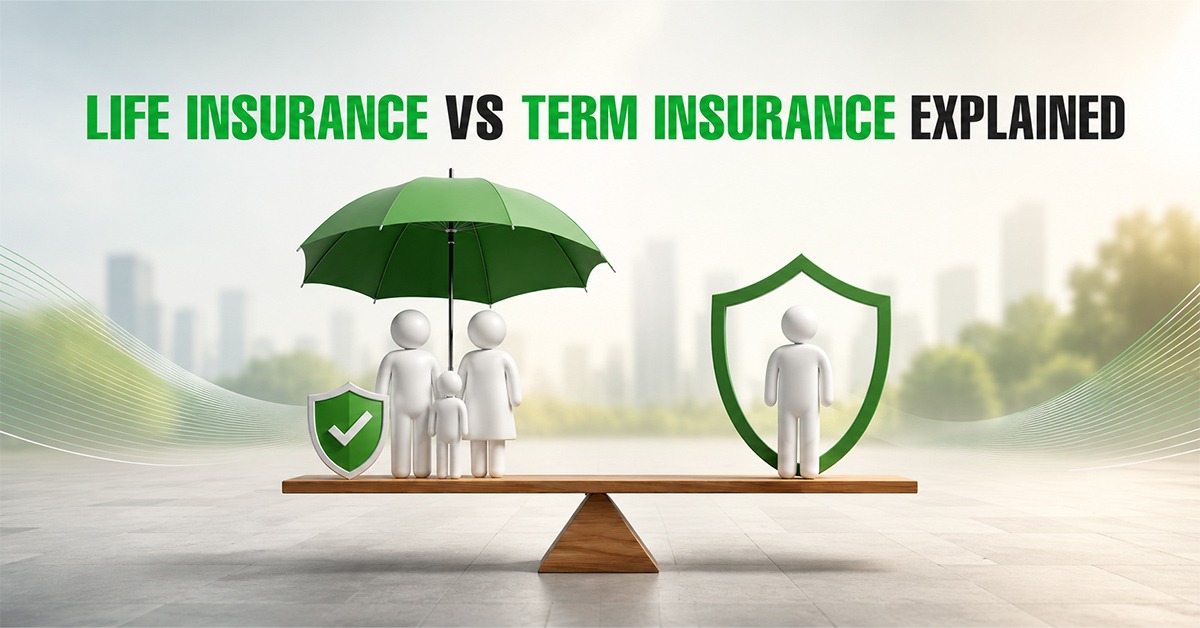
In India, where financial security is a top concern for both salaried professionals and self-employed individuals, choosing the right insurance policy isn't just a decision—it's a necessity. Life insurance and term insurance are two popular options, each with its own set of features and benefits. Yet, many find themselves puzzled by the differences, often mixing up the two. Understanding these distinctions can be the key to safeguarding your family's future.
The Basics: Life Insurance
Life insurance is a broad category that generally refers to any policy that pays out a sum of money either on the death of the insured person or after a set period. In India, life insurance often includes various plans like endowment policies, money-back plans, and whole life insurance. These policies not only offer life cover but also serve as investment tools with maturity benefits.
For instance, an endowment plan might offer life coverage along with a savings component that pays out a lump sum at the end of the policy term. This appeals to those looking for life cover plus some financial returns. However, these returns are often lower compared to other investment avenues, given the safety net they provide.
The Essentials of Term Insurance
Term insurance, on the other hand, is a pure protection plan. It provides financial coverage against the risk of death for a specified term. If the policyholder passes away during the term, the nominee receives the death benefit. Unlike life insurance, term plans have no maturity benefits. They’re straightforward: you pay a premium, and in case of an unfortunate event, your family gets a financial cushion.
Term insurance plans in India, like the policies offered by LIC or HDFC Life, usually come with lower premiums compared to life insurance. For example, a 30-year-old non-smoker can get a term plan with a ₹1 crore cover for as little as ₹10,000 annually. This makes term insurance a highly affordable option for comprehensive financial protection.
Cost Comparisons
When comparing costs, term insurance is significantly cheaper than life insurance. This affordability is because term insurance doesn’t offer any survival benefits. It’s pure risk cover. Life insurance, with its investment component, demands higher premiums.
Consider this: a 35-year-old looking for a ₹50 lakh cover might pay around ₹50,000 annually for a traditional life insurance policy. In contrast, a similar term insurance plan would cost just ₹5,000 to ₹10,000 per annum. The choice here hinges on whether you want just a safety net or a combination of safety and savings.
Understanding the Benefits
Term Insurance Benefits
1. Affordability: The biggest advantage of term insurance is its low cost, making it accessible for young professionals and those starting their careers.
2. High Coverage: Offers substantial coverage at minimal premiums, ensuring your family is financially secure.
3. Tax Benefits: Premiums paid towards term insurance are tax-deductible under Section 80C of the Income Tax Act, 1961.
4. Riders and Add-ons: Options like critical illness cover, accidental death benefit, and waiver of premium add layers of protection.
Life Insurance Plans
1. Investment Returns: Life insurance acts as a dual benefit product offering both protection and returns upon maturity.
2. Loan Facility: Policies like endowment plans can be used as collateral for loans, giving you access to funds in emergencies.
3. Tax Efficiency: Like term insurance, life insurance premiums qualify for tax deductions under Section 80C.
4. Wealth Creation: Endowment plans and ULIPs help in wealth accumulation over time, albeit with lower returns than pure investment products.
Who Should Choose What?
The decision between life insurance and term insurance largely depends on individual financial goals and needs. Here’s how you might decide:
- Young Professionals: If you're just starting out, with limited financial obligations, term insurance is a practical choice. It provides maximum coverage at minimal cost.
- Middle-Aged Individuals: If you're seeking both protection and savings, life insurance can be suitable. Consider plans that align with your long-term goals, like funding your child's education or retirement.
- Self-Employed Individuals: You might prefer life insurance for the dual benefit of protection and investment, especially if looking for structured savings.
Why Not Both?
It’s not an either-or scenario. Many financial advisors recommend a combination of both. Term insurance for risk cover and life insurance for savings and investment. This hybrid approach allows for comprehensive financial planning, especially in a volatile economic climate.
Imagine a scenario where you secure a term plan for ₹1 crore to cover immediate risks and a life insurance plan to grow your wealth. This dual approach ensures that you're not only protected but also on track to meet your future financial goals.
The Indian Insurance Landscape
The Indian insurance market has been growing steadily, with increased awareness and financial literacy. As of 2023, insurance penetration in India stands at approximately 4%, indicating room for growth. The government’s push for financial inclusion and digital insurance platforms has made purchasing and managing policies more accessible.
Companies like ICICI Prudential, SBI Life, and Max Life offer a plethora of options tailored to varied needs. With digital platforms simplifying the process, getting insured has never been easier.
An Aside on Premium Payments
In India, some families still prefer paying premiums annually, given the cultural emphasis on savings. However, monthly or quarterly payments are gaining traction among younger policyholders who manage tight budgets. The flexibility in payment frequency is a small detail, but it highlights the adaptability of insurance products to changing lifestyles.
FAQ
What is the main difference between life insurance and term insurance?
Life insurance combines protection with savings or investment, offering a payout either on death or after a certain period. Term insurance is purely risk cover without any maturity benefit, designed to provide financial protection to your family in case of your untimely death.
Can I convert a term insurance policy into a life insurance policy?
Some insurers in India allow term policies to be converted into life insurance policies, often within a specified period. This feature can be beneficial if your financial goals change over time. Check with your insurer about conversion options and any associated conditions.
Which is better for tax savings: life insurance or term insurance?
Both types of insurance offer tax benefits under Section 80C of the Income Tax Act. The choice depends more on your financial goals than tax savings. If you seek both protection and investment, life insurance could be preferable. If pure protection is your goal, term insurance may suffice.